









Water decides which floor belongs where
A lot of Hampton Roads sits low and close to tidal water, and the water is rising against the land. NOAA's tide gauge at Sewells Point in Norfolk recorded relative sea level up 0.64 feet between 1992 and 2023. In 2003, Hurricane Isabel pushed the tide there to 7.9 feet above mean lower low water, a five-foot surge, according to the National Weather Service. For floors on a ground level, and in any house in a flood zone, the material matters.
FEMA's Technical Bulletin 2 rates finish materials by whether they can take at least 72 hours of direct contact with floodwater without damage that needs more than cosmetic repair. On its list, carpeting, linoleum, engineered wood, plastic laminate and solid wood flooring are rated unacceptable below the flood elevation. Ceramic and porcelain tile set in mortar, concrete tile, terrazzo, formed-in-place epoxy and homogeneous vinyl sheets or tiles laid with chemical-set adhesives are rated acceptable; the same ceramic tile laid with organic adhesives is not. If a floor floods more than once, those ratings are a good guide to what goes back down.
The subfloor comes first
Moisture doesn't only come from floods. Damp air, leaks around toilets and tubs, and wet crawl spaces all reach wood subfloors. The EPA recommends keeping indoor humidity below 60 percent, ideally between 30 and 50 percent, and drying anything water-damaged within 24 to 48 hours to keep mold from growing. It also notes that porous materials like carpet may have to be thrown away once they have gone moldy.
A new floor is only as good as what is under it, so before anything goes down we check the subfloor for soft spots, rot around wet areas, squeaks and level. Older homes deserve an extra look. By the Census Bureau's 2024 five-year estimates, Norfolk's median home was built in 1964 and 44.4 percent of its homes were built before 1960, so there can be more than one layer of old flooring to take up before the new floor goes down.
How a floor strip and wax is done
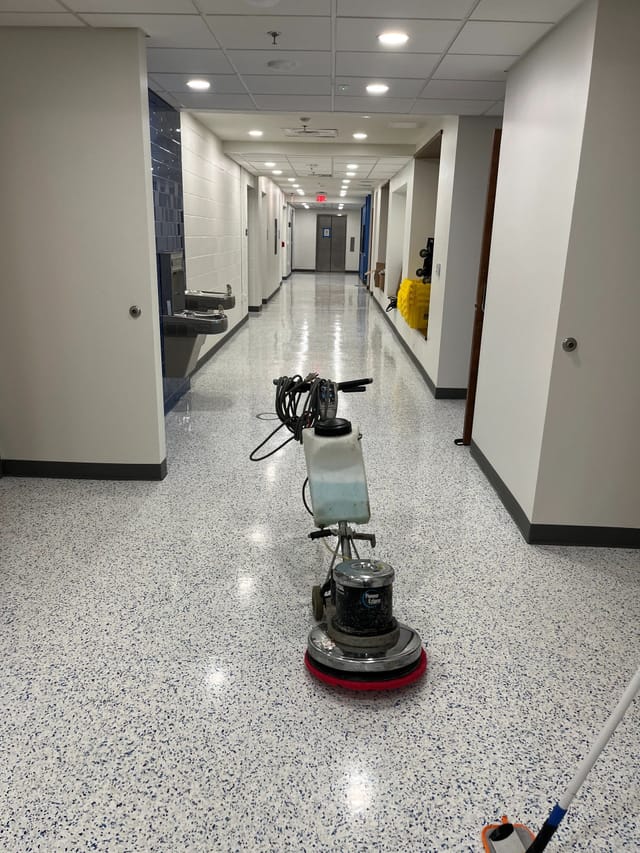
Vinyl composition tile, the tile in many offices, hallways and apartment buildings, is protected by layers of floor polish, and in time that finish wears and scratches. Armstrong Flooring's maintenance instructions for its Excelon tile lay out the restorative job:
- mix the stripping solution to the dilution the finish buildup calls for, and cordon off the area;
- mop the solution on generously, let it soak for the time the stripper's maker recommends, and keep the floor wet;
- machine scrub at 300 rpm or less with a blue pad to break up the old polish film, never letting the stripper dry on the floor;
- take up the dirty solution with a wet vacuum or mop, rinse with fresh, clean water and let the floor dry;
- apply 3 to 5 coats of high-quality floor polish.
Armstrong also says aggressive strippers, such as mop-on, mop-off, no-scrub and no-rinse products, are not recommended on tile less than two years old, because they can affect the adhesive. New tile should not be wet washed, machine scrubbed or stripped for at least five days after installation, and should not carry rolling loads for 72 hours. Between strips, a floor with enough polish left can be scrubbed and buffed or burnished to bring the gloss back.
What moves the price
For a new floor, the price moves with the area, the material you pick, how much old flooring comes up, the condition of the subfloor, the number of doorways, transitions and stairs, and the trim. Water damage adds tear-out, drying time and subfloor repairs. A strip and wax is priced on the area, how much old finish has built up, and access: hallways and common areas can be done at night or between tenants so the floor can dry with no traffic on it.
Sources
- NOAA Tides and Currents: Sea level trends, Sewells Point, VA
- National Weather Service Wakefield: The hurricane history of central and eastern Virginia
- FEMA Technical Bulletin 2: Flood damage-resistant materials requirements (2025)
- EPA: A brief guide to mold, moisture and your home
- EPA: Mold cleanup in your home
- U.S. Census Bureau ACS 2024 5-year estimates via Census Reporter
- Armstrong Flooring: Vinyl composition tile maintenance instructions
- Stormy Services old website (services)
- Stormy Services intake (2026-11-23)


