
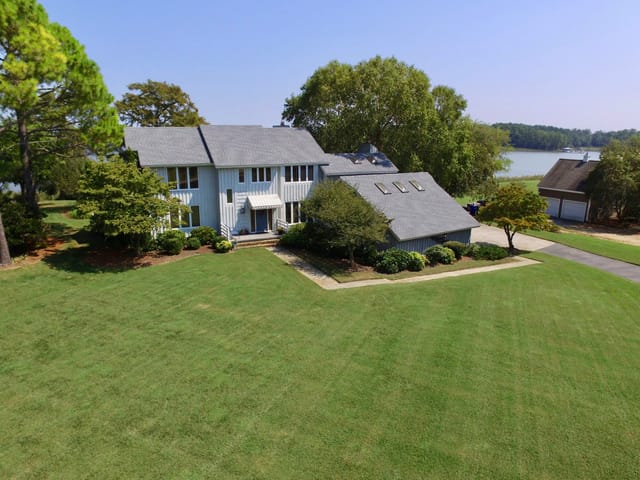



The Atlantic hurricane season runs from June 1 to November 30. The National Hurricane Center puts its peak around September 10, with most activity between mid August and mid October, and based on 1991 to 2020 an average season brings 14 named storms, 7 hurricanes and 3 major hurricanes. Not every one comes near Hampton Roads, but enough do. The National Weather Service office in Wakefield counts hurricane force winds reaching the area about three times every 20 years, with considerable damage two or three times a century.
The roof takes the first hit. Here is what to look at before the season, and what to ask for if the roof needs replacing.
What storms have done here
The local record explains the worry. Hurricane Hazel in October 1954 sent gusts to 100 mph at Norfolk Airport, the highest wind on record there. The August 1933 hurricane set Norfolk's record tide of 9.8 feet above mean lower low water. Isabel in September 2003 brought the region's greatest wind and storm surge since Hazel and the 1933 storm, with gusts to 83 mph at Norfolk Naval Station and the most extensive power outages Virginia had ever seen. Matthew in October 2016 stayed offshore and still dropped 6 to 11 inches of rain on southeast Virginia, with gusts of 75 mph at NAS Oceana.
A walk around the house
Most of a pre-season check can start from the ground, with binoculars if you have them.
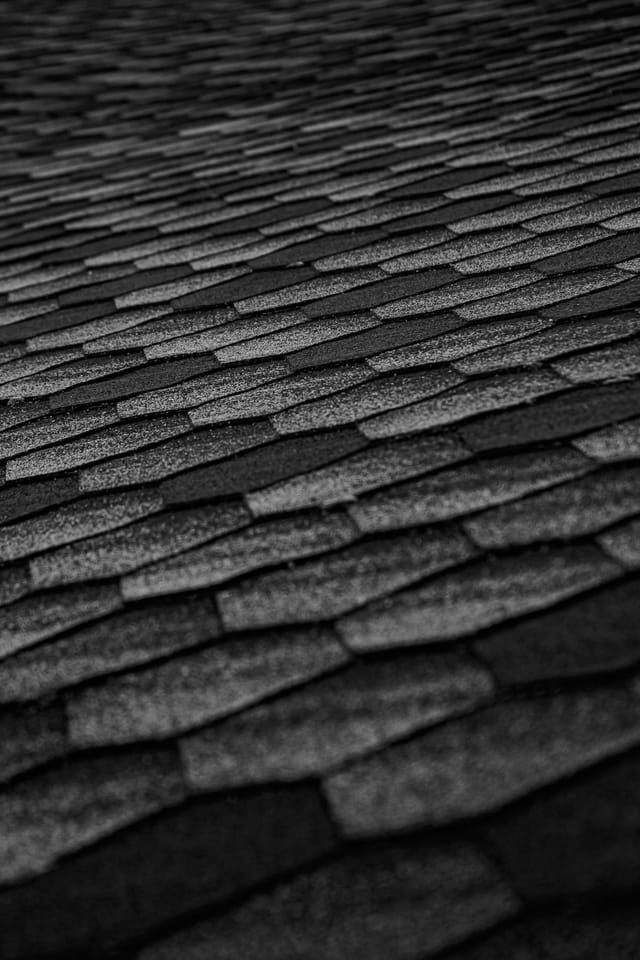
- Shingles. Look for missing, lifted or creased shingles, especially along the eaves, rakes, hips and ridge, the edges high wind guidance singles out for extra securement.
- Flashing. Check the metal where the roof meets a wall, a chimney, a vent pipe or a skylight. Federal Building America guidance calls for flashing at every penetration and roof-wall intersection, worked in with the roofing and the wall's own weather barrier.
- Edges. Drip edge belongs at the eaves and the rakes. If the edge looks ragged or bare decking shows, have it checked.
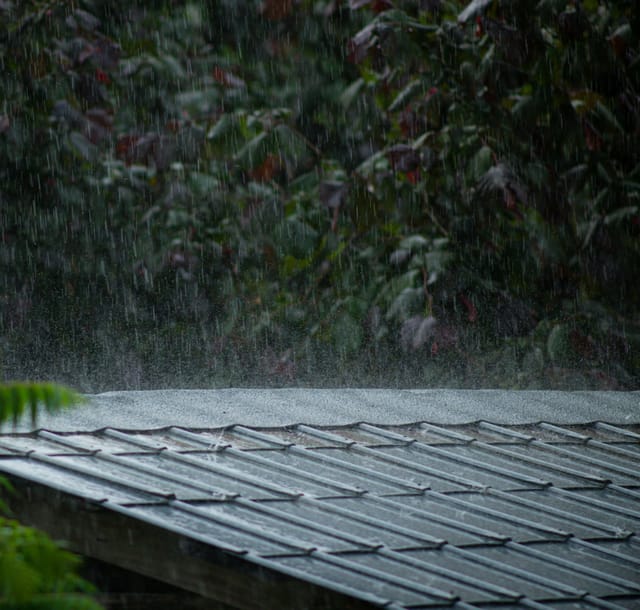
- Attic vents and soffits. IBHS testing shows wind can drive rain almost sideways, up under overhangs and through vents not built to stop it, and that soffits are often hung with too little support and blow out. Look for loose soffit panels and vents.
- Gutters and drains. Ready.gov's hurricane checklist starts with clearing drains and gutters, and EPA's moisture guide says to clean and repair gutters regularly. Water that can't get off the roof finds another way in.
- Inside. In the attic after a rain, look for wet decking, stained rafters or damp insulation. On the ceilings below, look for stains that grow.
If the roof needs replacing
A re-roof is the moment to build in storm resistance, and the guidance for high wind areas is specific. The Building America guide on asphalt shingle roofs, which follows the IBHS FORTIFIED standards, asks for:
- A sealed roof deck, using one of three methods: a self-adhered membrane over the whole deck, 4 inch flashing tape over every sheathing seam under #30 felt or a synthetic underlayment, or a two-layer #30 felt system. If shingles blow off, the sealed deck keeps the rain out. IBHS says that for every inch of rain that hits an exposed deck, the equivalent of nine bathtubs of water can pour inside.
- Better deck nailing. IBHS testing shows that switching from smooth nails to ring-shank nails and spacing them closer can double the uplift a roof deck withstands.
- Shingles rated for the wind, chosen for the design wind speed where you live, and installed to the maker's high wind instructions: six nails per shingle, placed in the nailing zone, driven neither too deep nor too shallow, and no staples.
- Corrosion-resistant fasteners near the water. Within 3,000 feet of salt or brackish water, hot-dip galvanized or stainless steel fasteners.
- Extra hold at the edges. Continuous bands of asphalt roof cement under the shingles and starter strips along the eaves, rakes, hips, ridges and open valleys.
Permits for a re-roof
The rules depend on where the house sits. Virginia's building code exempts replacing any amount of roof covering on houses from permits only where the nominal design wind speed is 100 mph or less, and always exempts replacing 100 square feet or less; it also lets the building official require a permit for replacement roofing in a local historic district or a flood zone. Norfolk's permit FAQ says one and two family re-roofs don't need a building permit, though changing the roof pitch does. Virginia Beach's residential permit page lists roofing replacements among permitted work, while its storm recovery guidance says replacing roof covering on a single family home does not need one. When the city pages read differently, a call to the building department settles it before work starts.
Before the next storm
If something on your roof doesn't look right, don't wait for a named storm to find out. Call or text us at (757) 957-3340 and we'll come look and give you a free quote. And if a storm gets there first, we answer emergency repair calls at any hour.
Sources
- Tropical cyclone climatology National Hurricane Center.
- The hurricane history of central and eastern Virginia National Weather Service, Wakefield.
- Hurricane Isabel, September 18, 2003 National Weather Service, Wakefield.
- Asphalt shingle roofs U.S. Department of Energy, Building America Solution Center.
- FORTIFIED Roof Insurance Institute for Business and Home Safety.
- Hurricanes Ready.gov, U.S. Department of Homeland Security.
- A brief guide to mold, moisture and your home U.S. Environmental Protection Agency.
- 13VAC5-63-80, Virginia Uniform Statewide Building Code, Section 108 Application for permit Virginia Administrative Code.
- Permits: frequently asked questions City of Norfolk.
- Residential building permits City of Virginia Beach.
- Storm recovery information City of Virginia Beach, Planning and Community Development.
Every home is different. Talk to us about yours before you decide; nothing here replaces a look at the job.


